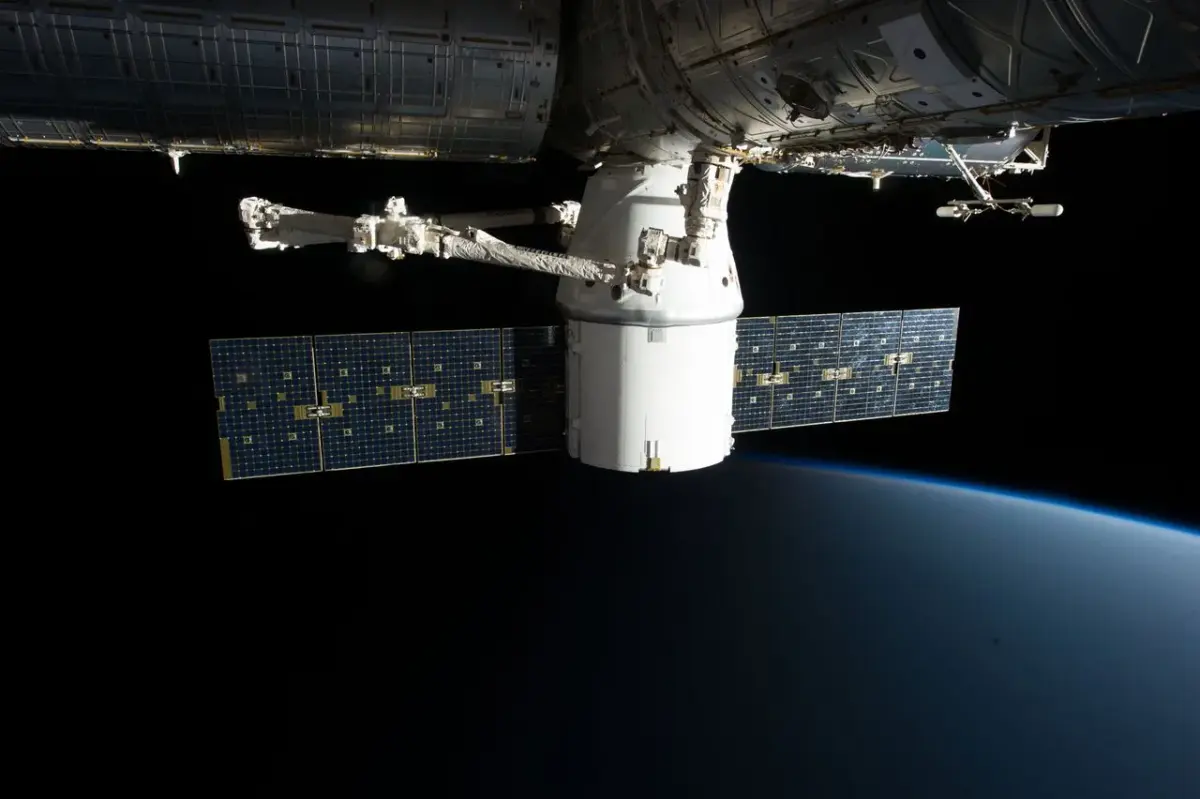
Stars and distant galaxies are nowhere to be seen. Instead, silent machines hurtle through the darkness, passing dangerously close to one another. Low Earth orbit. Objects ripping through the void at 27,000 kilometers per hour. Hit a stray, microscopic bolt at that speed, and it hits back with the kinetic energy of an artillery shell.
The next major cybersecurity frontline might not be deep underground. It is 500 kilometers above our heads.
In recent years, the space boom—driven by SpaceX’s Starlink, OneWeb, and Amazon—has triggered a massive orbital gridlock. Congestion is the new normal. Meanwhile, researchers are tracking a dirtier threat: the vulnerable software and ground stations running the whole show. Digital backdoors are left wide open. The dark web already feeds on this, hosting underground markets for stolen credentials and software exploits. It is an active ecosystem, and experts fear space-related access keys will soon become standard street commodities there.
The threat is not a teenager casually hijacking a military satellite from their living room. That requires sophisticated, high-level technical expertise. But the risk is real: a well-organized group, by compromising ground systems, could potentially alter a commercial satellite's path.
No explosion required. Just a tiny, intentional orbital correction. A brief thrust of the engines, and physics does the rest. Days later, two multi-ton objects arrive at the exact same point in space.
The full chain reaction has never happened. But every link in the chain already has.
Look at the record. Back in 2007, a Chinese missile shattered a defunct weather satellite, instantly littering the orbit with thousands of debris fragments too small for anyone to track reliably. Two years later, the American Iridium 33 and a dead Russian Kosmos-2251 slammed into each other, leaving a massive cloud of high-speed wreckage. Then came 2022. In the opening hours of the Ukraine invasion, a single cyberattack blinded tens of thousands of Viasat satellite modems overnight.
What has not happened yet is for these separate threads to collide at the same time.
If cybercriminals trigger intentional collisions in crowded orbits, it could initiate the physics model described by NASA scientist Donald Kessler. The Kessler syndrome. A domino effect. The debris from the initial crash strikes other satellites. Those impacts create even more debris, triggering further collisions.
This won’t be a fast-moving Hollywood disaster. The bleakest scientific models show a slow-motion catastrophe playing out over years, or even decades. A gradual choking of the orbital lanes until low Earth orbit hardens into an impassable field of junk.
This does not mean civilization collapses overnight. But navigation, global logistics, the timing systems underpinning global finance, and telecommunications would all come under immense strain. A surprising number of the modern world’s invisible threads run through space. If they snap, terrestrial backup systems will quickly overload.
The safety of our civilization rests on a fragile balance. The belief that space is simply too big for us to ruin.
That belief is wrong. The stakes are no longer about who builds the space cities of the future. It is about whether humanity will build, with its own hands, a glowing metallic cage that seals off our path to the stars for centuries.