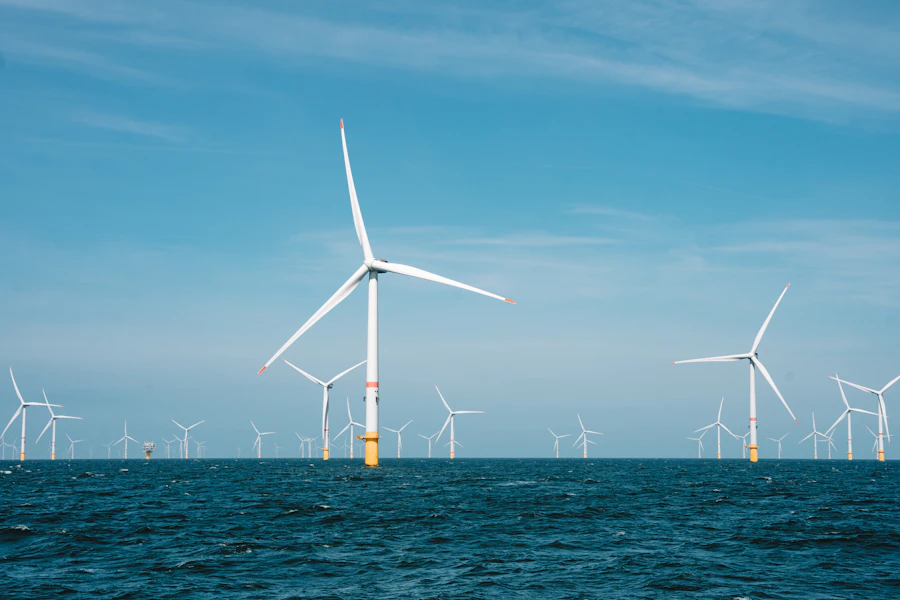
A permanent home in Aberdeen. A multi-billion pound capital fund. But the offshore turbines remain on paper.
The establishment of Great British Energy's permanent headquarters in Marischal Square, confirmed in February 2026, was hailed as a monumental victory for Scotland's energy capital. For decades, Aberdeen powered the United Kingdom through North Sea oil and gas; now, GBE intends to draw on this abundant local engineering talent to build the country’s clean energy future. The momentum is visible. In May 2026, the state-backed company launched its first major co-investment initiative alongside The Crown Estate, backing the third round of the £15 million Supply Chain Accelerator programme. We wanted energy independence. We wanted cheap, homegrown power. We got a hard physical wall. Despite the £8.3 billion of public capital at its disposal, GBE’s clean energy mission is grinding against deep, systemic constraints that threaten the government's ambitious 2030 decarbonisation target.
The Mirage of Financial Mobilisation
The central assumption made by policymakers in London was that public capital alone could instantly unlock the private investment required to scale our offshore wind capacity. While the partnership between GBE and the Crown Estate aims to unlock up to 30 gigawatts of new seabed leases, throwing money at developers does not build the heavy industrial infrastructure required to support them. Our supply chain is dangerously hollowed out. Building a modern deep-water wind farm requires massive specialised vessels, deep-water port facilities, and a domestic workforce trained in advanced marine engineering. Currently, the UK lacks the domestic manufacturing capacity to produce high-value components like turbine blades, heavy foundations, and high-voltage subsea cables, forcing developers to rely on volatile global supply chains. Furthermore, the newly launched Ethical Supply Chain Advisory Group on June 24, 2026, is a noble attempt to drive industry standards, but it does little to address the immediate physical shortages on our docks.
A quiet delay. A ten-year wait for a single wire.
Three Structural Bottlenecks Facing Great British Energy
The struggle to decarbonise the UK power grid is not a temporary legislative hiccup; it is a structural crisis defined by three permanent constraints:
- The Ten-Year Grid Connection Queue: A massive backlog in the national grid infrastructure means that newly approved offshore wind farms face waiting times of up to a decade before they are legally allowed to plug into the electricity network.
- The Port Infrastructure Deficit: Our regional ports are physically too small to accommodate the mammoth logistics of deep-water floating offshore wind turbines, requiring hundreds of millions of pounds in patient capital to rebuild Scotland's harbours.
- The Skilled Labour Shortage: A severe deficit of marine engineers, offshore technicians, and high-voltage electrical specialists, with GBE desperately hosting recruitment events in Aberdeen to attract talent from the declining fossil fuel sector.
"We can award all the seabed leases we want, but if a developer has to wait until the late 2030s just to get a grid connection, or if we have to import every single turbine blade from factories in Asia, we do not have an energy policy. We just have an incredibly expensive concrete monument to political vanity," says a senior maritime analyst based in Aberdeen. This warning reflects the growing scepticism within the Scottish renewables sector. While GBE’s Local Power Plan webinars, launched on June 22, 2026, show a genuine commitment to community energy projects, the core challenge remains industrial, not local. If the government cannot streamline the planning process and bypass the National Grid's bureaucratic inertia, GBE’s Aberdeen anchor will remain a symbol of unfulfilled potential rather than the engine of a clean energy empire.