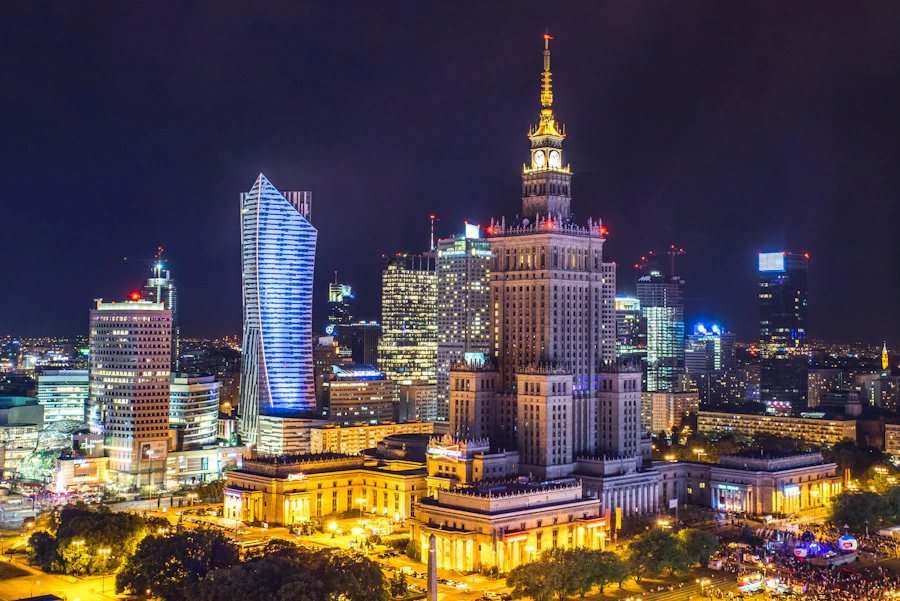
When Poland joined the European Union in May 2004, the conventional forecast was for gradual convergence over a generation — economists pointed to the experience of Spain and Portugal, which had taken 25 to 30 years to substantially close their income gaps after accession. Poland has done it faster, and the question of why carries lessons that extend well beyond Central Europe.
The structural fund dimension is significant but not sufficient as an explanation. Poland has absorbed EUR 160 billion in EU cohesion and structural funds since accession — the largest cumulative recipient in the programme's history — and has deployed them with unusual effectiveness on transport infrastructure, business environment improvements, and education investment. The motorway network expanded from 400 to 5,200 kilometres between 2004 and 2024, fundamentally altering the economics of domestic and international logistics.
But the deeper driver has been the quality of Poland's integration into European manufacturing supply chains. The country's engineering universities — Politechnika Warszawska, AGH in Kraków, the Wrocław University of Technology — have produced a technically skilled workforce that German, French, and increasingly American manufacturers have found capable of executing increasingly sophisticated production. The automotive sector alone employs 200,000 people and contributes 12 percent of industrial output.
The challenge facing Polish policymakers now is the middle-income transition: moving from an economy that competes on skill and cost into one that competes on innovation. R&D spending, at 1.4 percent of GDP, remains below the EU average and well below the frontier economies Poland aspires to join.
"We have run the convergence race," said National Bank of Poland Governor Adam Glapiński. "The next race has different rules. We are learning them."