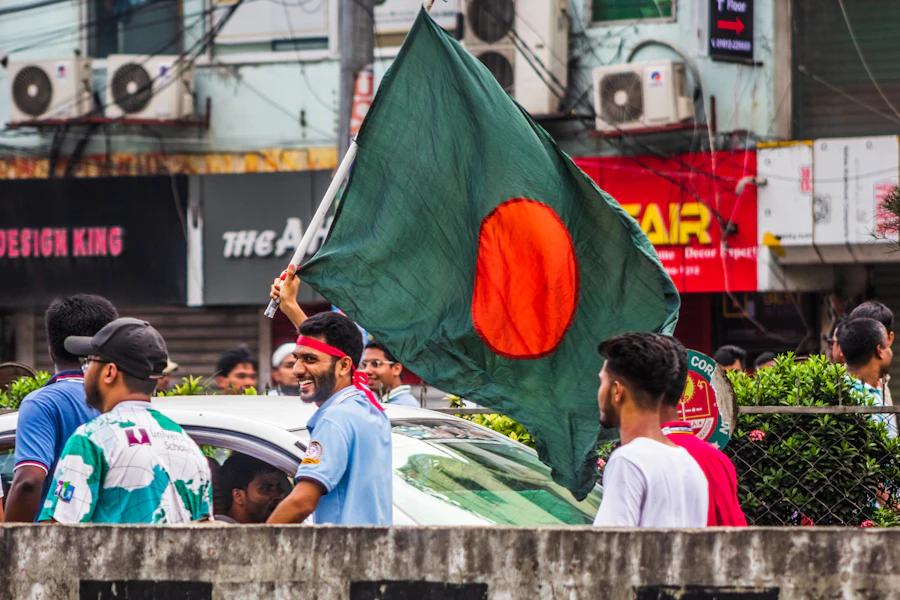
On August 5, 2024, Sheikh Hasina boarded a military aircraft and fled Bangladesh as a student-led uprising toppled her fifteen-year government. She landed in India, where she has remained ever since — sheltered by the country that had been her closest strategic partner. Fourteen months later, a Dhaka tribunal sentenced her to death. The question of what happens next has become one of the most consequential diplomatic disputes in South Asia.
The verdict
On November 17, 2025, Bangladesh's special International Crimes Tribunal 1 — a court Hasina herself established in 2010 to prosecute war crimes from the 1971 independence war — found her guilty of crimes against humanity. The charges related to the violent suppression of the 2024 protests that ultimately brought her down. A United Nations investigation found that approximately 1,400 people were killed during the crackdown, with police, border guards, and intelligence agencies implicated in serious human rights violations. The tribunal sentenced Hasina to death on two counts and to imprisonment until natural death on a third. Her former Home Minister Asaduzzaman Khan Kamal received the same death sentence. Both were tried in absentia.
The day of the verdict, Bangladesh's Foreign Ministry called on India to hand over Hasina "without delay," describing the extradition as an "obligatory responsibility" under the bilateral extradition treaty the two countries signed in 2013. Keeping her, the ministry said, would be "a grave act of unfriendly behaviour" and "a travesty of justice."
Why India won't extradite her
India's response was measured to the point of silence. A Foreign Ministry spokesman said New Delhi had "noted" the verdict. Asked about the formal extradition request Bangladesh submitted days later, officials said they were "examining" it. That examination has produced no result. Experts on South Asian affairs are nearly unanimous: India will not send Hasina back.
The legal ground for refusal is available. The 2013 extradition treaty contains a standard "political offence" exception that allows either party to decline a request if the underlying crime is political in nature. Indian constitutional law adds another layer — the Supreme Court has held that Article 21, guaranteeing the right to life and liberty, extends to foreign nationals on Indian soil, and that extraditing someone to face execution can violate that right. Hasina has not exhausted her legal remedies in Bangladesh, where an appeal to the Supreme Court remains open. Until she does, Indian officials have a procedural rationale for inaction.
The deeper reason is strategic. For fifteen years, Hasina gave India what it wanted: security cooperation, transit access, and a government in Dhaka that kept Chinese influence at arm's length. Handing her to a tribunal that India's own analysts describe as shaped by political motivations would be, in the words of one New Delhi professor, an acknowledgement that India backs whoever holds power in Dhaka rather than its actual partners.
The new government's position
Bangladesh's general election in February 2026 — the country's first genuinely free vote in nearly two decades — delivered a landslide to the Bangladesh Nationalist Party, the political movement that Hasina spent years trying to destroy. The BNP's position on extradition is unambiguous. Senior party leader Salahuddin Ahmed said after the election victory that Bangladesh "always presses for her extradition according to the law" and called on India to "please send her back to face trial." Foreign Minister Khalilur Rahman has raised the issue directly with Indian counterparts.
India's response has been to restore diplomatic mechanisms — Foreign Secretary Vikram Misri visited Dhaka in May 2026 and announced the reactivation of more than 40 bilateral channels that had gone dormant — while saying nothing specific about Hasina. The pattern is one of engagement designed to prevent a complete rupture without conceding the central demand.
What comes next
The Hasina case sits at the intersection of justice, sovereignty, and geopolitics in ways that make resolution genuinely difficult. For Bangladesh, the conviction represents accountability for the deaths of 1,400 people and the culmination of a revolution that reshaped the country's politics. For India, extraditing a former head of government to face a death sentence — before all legal avenues are exhausted, and at the demand of a government with its own political interests in the outcome — is a step that sets precedents far beyond this case. For Hasina herself, now 78 and living in New Delhi, the question is whether she will ever return to the country she governed for fifteen years — and under what circumstances.
The answer, for now, is that nobody is in a hurry. Bangladesh has a new government with other priorities, India has an uncomfortable status quo it can live with, and the woman at the centre of it all remains in exile, sentenced to death by a court she cannot appeal to because she will not go home.