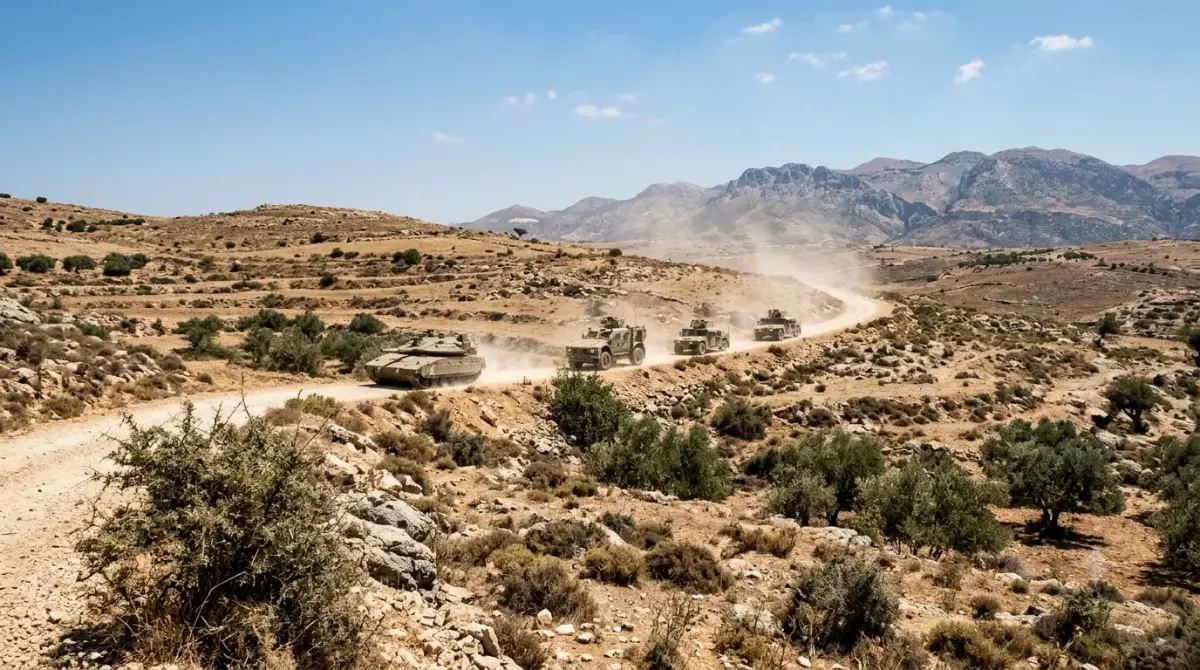
On Friday evening in Washington, three countries signed a piece of paper. Israel, Lebanon, and the United States concluded a framework agreement – not a final treaty, but a statement of principles – on regulating Israel's presence in southern Lebanon. Netanyahu framed it as a strategic success. Beirut celebrated it as the first step toward reclaiming sovereignty. Hezbollah rejected it outright.
Those three reactions say everything.
What Does the Agreement Actually Contain?
The deal rests on three pillars. The first: mutual sovereignty – no Lebanese armed group may open fire on Israel without the explicit permission of the Lebanese government. The second, and this is the crux: a pilot program will be launched in two districts in the south, where the Lebanese army takes control, with non-state armed actors excluded. Israel's withdrawal is tied to this process and will only proceed to the extent that disarmament actually takes place. The third: the entire process is monitored by an American oversight mechanism.
In other words, the withdrawal is conditional, phased, and externally controlled. It is not automatic.
Who Gains What?
Netanyahu was blunt: Israel is giving up positions it "no longer needs." According to CNN, this allowed him to avoid open confrontation with Washington while retaining his strategic footholds. Just one day earlier, Israel's defense minister had said Israel would not leave Lebanon even if the US demanded it. On Thursday, the Israeli military only announced it was "temporarily reducing its forces." No mention of territorial handover. Then came Friday evening's announcement.
Lebanon is building a different narrative. Nada Hamideh Mouawad, Lebanon's ambassador to Washington, said this is the first step toward restoring Lebanese sovereignty. President Joseph Aoun thanked the Trump administration for organizing the talks – and added that Lebanon will be a state with "no partner in authority over its own land and people." That is a thinly veiled message to Iran.
The Breaking Point
Hassan Fadlallah, Hezbollah's parliamentary representative in Lebanon, did not mince words. He rejected any direct negotiations with Israel and called on the government to withdraw every decision it had signed. He told the Hezbollah-aligned Al-Mayadeen network: "Whoever shakes hands with the enemy is just as criminal."
Iran is also losing – and Tehran knows it. The chairman of the Iranian parliament's national security committee had warned Persian Gulf states just days ago: whoever sides with the US risks their own stability. The Washington signing swept that message aside. Tehran had been trying to force an Israeli withdrawal through pressure. Instead, Israel, Lebanon, and the United States jointly sent the message: this is none of Iran's business.
What Is Still Missing?
Almost every detail. The implementation timeline is not public, the disarmament mechanism is undefined, and the boundaries of the pilot zones remain unclear. For a framework agreement, this is not surprising – but it also means that any single point can stall, and the entire structure collapses.
If it does hold, it could serve as a model for what might follow in Gaza or Syria.
For now, however, there is only a signed piece of paper. Everything else is a matter of negotiation.