Four hundred drones, an oil refinery in ruins, a colonel found dead. The night of June 28 to 29 was anything but ordinary.
The Fires of Slavyansk
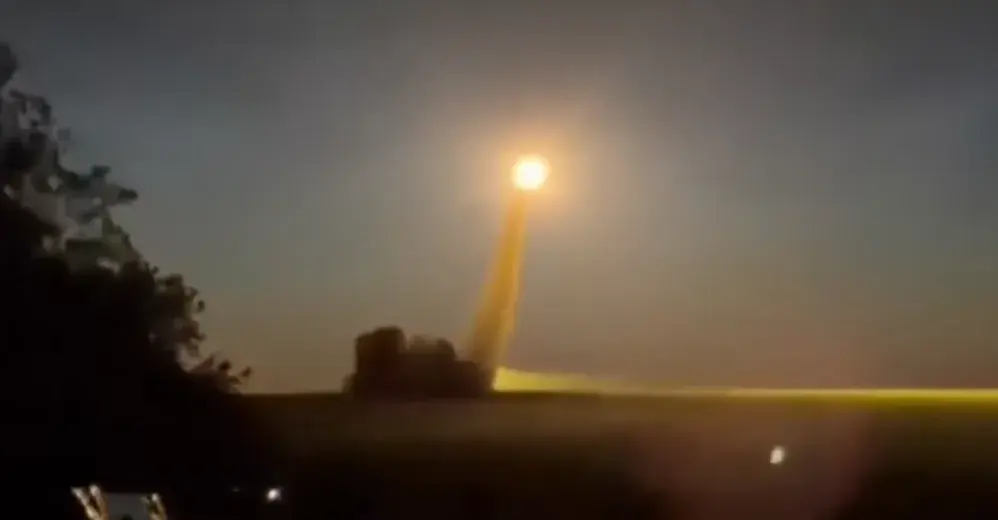
Ukraine put the night to work. According to the DroneBomber channel, nearly four hundred Ukrainian drones were launched simultaneously toward multiple Russian regions — a coordinated strike of this scale is rarely seen.
The most striking target was in Slavyansk-on-Kuban. The Krasnodar oil refinery was hit; the fire spread across twenty thousand square meters, and the flames were visible from neighboring towns. Satellite imagery published by UNITED24Media confirmed it by morning: almost nothing remained of the facility. RIA Novosti reported the fire was eventually extinguished, but gave no word on the plant's condition.
It wasn't the only target. In Kerch, both the Exilenova+ channel and NASA's FIRMS fire detection system registered fires near the Kuban crossing point — Russian commentators suggested the blaze was in the operational zone of an S-300/S-400 air defense position. Explosions were reported in Sevastopol, Feodosia, and Balaklava, with power outages across parts of the peninsula. In the Luhansk region, a drone strike partially collapsed a railway bridge near the village of Sabivka, according to UNITED24Media.
Moscow said its air defenses destroyed seventy-two drones. The fires in Kuban said otherwise.
The Colonel Found Dead
A separate chapter: the death of Colonel Volodymyr Kononnykov, commander of the 154th Separate Mechanized Brigade.
The Southern Operational Command announced that Kononnykov had been found dead. Police opened a murder investigation — the officer's body bore a gunshot wound. The circumstances remain unclear.
Russian propaganda channels did not wait for details. Военкор Котенок immediately declared that the Russian army had "eliminated" him. No evidence, no source. Ukraine's police investigation leaves the question open: an internal incident, a Russian operation, something else? The absence of an answer is itself a signal.
The Front and Its Cost
Meanwhile, the grinding continued on the front line. Ukraine's General Staff reported one hundred and ninety-seven engagements on June 28 alone — the fiercest pressure concentrated around the Pokrovsk and Sloviansk directions.
Zaporizhzhia city was hit by two air strikes: four dead, twenty-eight wounded. In Kharkiv, a missile strike killed a woman and injured seven others, including children. An industrial facility was struck near Kryvyi Rih. In the Sumy region, a drone killed an elderly woman.
The Russian military, for its part, announced the capture of the settlements of Pysantsi and Novoselyvka.
Putin Admitted What He Previously Denied
The night's political balance sheet also includes Putin's statements from yesterday.
The Russian president acknowledged that Crimea is facing a fuel shortage, with reserves sufficient for only "a few days." The country's largest refineries are operating at maximum capacity — imports will be needed. Context: Ukrainian drone strikes have been targeting Russian energy infrastructure for months, and the burning refinery in Slavyansk-on-Kuban is evidence that the strategy is working.
Another Putin statement veered into unintentional comedy. The Russian president claimed that Ukrainian forces were "nearly encircled" near Stary Oskol — except Stary Oskol is a Russian city, located in Belgorod Oblast. TSN.ua picked up the slip immediately. Moscow did not comment.
What Comes Next
The Crimean strike sequence — Sevastopol, Kerch, Feodosia, Balaklava all hit within a single night — was not random scatter. The simultaneity signals coordinated pressure on the peninsula's infrastructure. Putin's admission of a fuel shortage and the need for imports suggests that pressure is being felt.
On the Kononnykov case, no definitive picture is possible yet. What the police investigation reveals will be a matter for the days ahead.