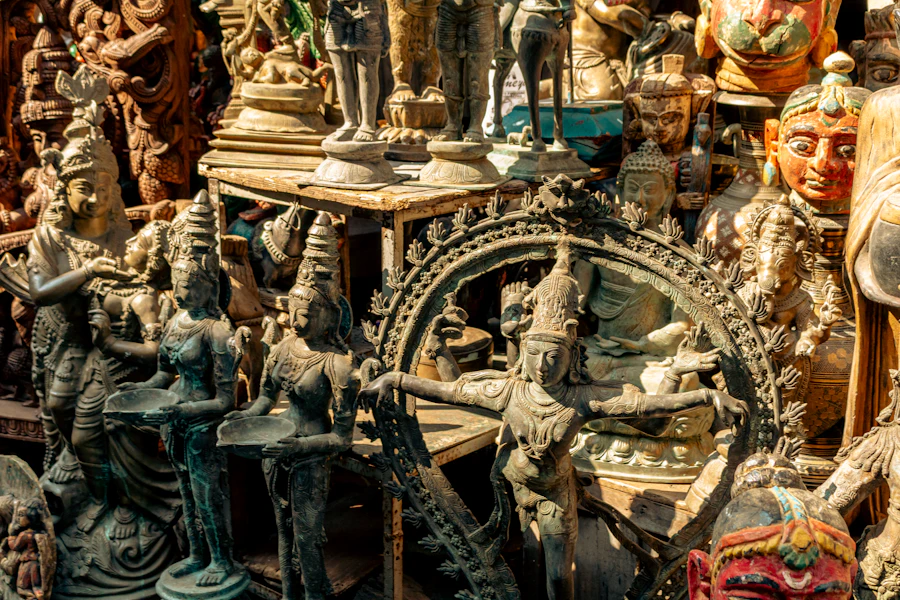
The Return of the Looted Gods
On April 28, 2026, New York law enforcement authorities handed over hundreds of priceless historical artifacts at a formal repatriation ceremony at the Indian Consulate in Manhattan. For decades, these sacred objects were treated as mere commodities, sold through elite international galleries with forged papers. Now, they are heading home. The restitution of 657 objects is the result of multiple coordinated investigations into global smuggling networks. It is a massive, highly complex operation that highlights both the success of international police cooperation and the dark, deep-rooted threat of cultural plunder. Stolen from rural shrines. Smuggled across oceans. Finally recovered.
The Masterpieces of the Repatriated Haul
The sheer scale of this repatriation is staggering, spanning centuries of artistic and religious evolution. Among the over six hundred recovered items, a few extraordinary pieces stand out as key highlights of India’s historical legacy:
- The Avalokiteshvara Bronze ($2 Million): Seized from a private New York collection, this seventh-century masterpiece from Sipur, Chhattisgarh, depicts the Buddhist deity seated on an inscribed double-lotus base over a lion-flanked throne. It was stolen from a regional museum and smuggled out in 1982.
- The Dancing Ganesha: An eleventh-century sandstone sculpture looted from a temple in Madhya Pradesh around 2000, showcasing the fluid, energetic carving style of central Indian medieval art.
- The Standing Buddha: A highly detailed red sandstone figure of the Buddha standing with his right hand raised in the protective 'abhaya mudra' gesture, originating from northern India.
- The Subhash Kapoor Trail: Hundreds of recovered terracotta items and stone statues were traced directly to the illicit stock of Subhash Kapoor, a notorious art dealer currently serving a jail term in Tamil Nadu for running a multi-million-dollar smuggling empire.
Dismantling the Global Smuggling Engine
The return of these treasures is living proof of what can be accomplished when the Indian Ministry of Culture, the Archaeological Survey of India (ASI), and US federal agencies align their resources. Manhattan District Attorney Alvin Bragg and Homeland Security Investigations have spent years tracing the complicated paper trails left by black-market dealers. Smugglers frequently relied on falsified provenance records to sell stolen items to unsuspecting museums and wealthy private collectors. By systematically tracking down these networks, law enforcement is making it increasingly difficult for traffickers to laundry looted goods. Seemingly, the golden age of consequence-free art smuggling is coming to an end.
The Battle to Protect the Remaining Shrines
While the New York ceremony is a massive diplomatic victory, cultural activists warn that the threat is far from over. Thousands of ancient, unprotected temples in rural India remain highly vulnerable to opportunistic thieves. Local law enforcement is often underfunded and lacks the specialized training to identify and protect heritage sites. Unless India establishes a comprehensive national registry of every temple artifact and heavily polices its regional borders, the recovery of these 657 pieces will only be a temporary band-aid on a continuously bleeding wound. It is arguably the most critical struggle for India's modern cultural identity.