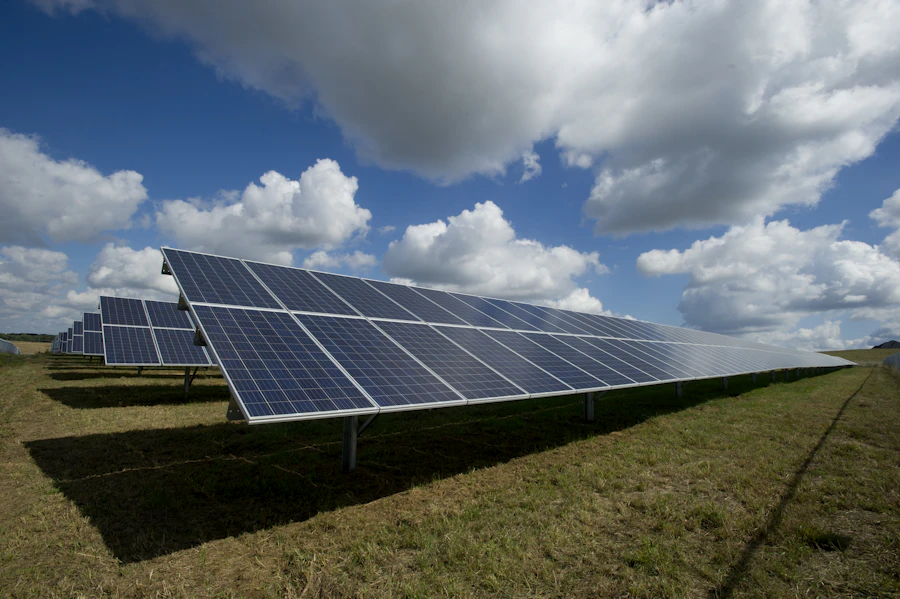
Fourteen gigawatts in three months. That is what India added in solar capacity between January and the end of March 2026, according to JMK Research — a roughly 95% jump from the previous quarter, and nearly double what the country installed in Q1 2025. Of that total, 12.12 GW came from utility-scale projects and 2.14 GW from rooftop installations. For the full financial year ending March 31, solar additions reached 44.62 GW, up 87% year-on-year. Ground-mounted capacity more than doubled.
The headline is extraordinary. India now has 150 GW of installed solar — third in the world. Renewables account for 55% of total installed electricity capacity. The country hit its 2030 climate target of sourcing half its power from non-fossil sources five years early.
And yet.
Private renewable energy investment in Q1 2026 collapsed. Not slowed — collapsed. From $9.8 billion in the same quarter a year earlier to $3.3 billion. A drop of 65.8%, according to the Institute for Energy Economics and Financial Analysis. The reason, IEEFA said, was not a lack of ambition or appetite. It was curtailment: solar panels generating power that the grid cannot absorb and cannot move. The transmission infrastructure is expanding — $26 billion is being invested in it this year, up 15% annually over five years — but the solar boom is simply outrunning it.
The IEA's World Energy Investment 2026 report put India's total energy investment on track for a record $170 billion this year, growing at 11% annually for the past five years. Solar PV investment grew at 25% annually over the same period. Oil refining investment — less celebrated, equally real — grew 23%. Together, those two sectors account for a quarter of India's entire energy investment growth.
That last part tends to get cut from the green energy narrative. India is simultaneously the world's fastest-growing solar market and the world's second-largest investor in coal supply. Coal investment is heading toward $13 billion in 2026. The government's target is 1.5 billion tonnes of domestic coal production by 2030, up from around 1 billion today. India invests three dollars in renewables for every one dollar in fossil fuel power generation — a ratio that has improved sharply — but the fossil dollar is not going anywhere soon.
The rooftop story is more straightforward. The PM Surya Ghar: Muft Bijli Yojana scheme — free electricity for households through subsidised rooftop solar — has now covered more than 2.6 million homes and disbursed nearly $1.8 billion in central financial assistance. Rooftop additions hit 8.7 GW in FY2026, up 69% year-on-year. Maharashtra led, followed by Gujarat and Tamil Nadu.
Rajasthan led large-scale additions, accounting for 35% of utility-scale capacity in FY2026, followed by Gujarat at 26% and Maharashtra at 18%. Waaree was the dominant module supplier with a 17.2% market share. Domestic manufacturing is expanding fast: 13 solar manufacturers added 14.4 GW of module capacity in Q1 alone. The ALMM List-II policy, which came into effect in June 2026, is pushing further localisation of solar cell production toward a 40 GW target.
The pipeline is enormous. JMK estimates 169 GW of solar, wind, hybrid and storage projects currently in development — expected online within four to five years. Battery storage tenders crossed 100 GWh in 2025, more than ten times the 2023 level. The Adani Group alone holds a portfolio of around 42.4 GW across operational and pipeline projects.
What the IEA calls a success story — and it is — comes with a structural warning buried in the footnotes. High financing costs remain a major challenge for capital-intensive renewable and storage projects. The grid is the binding constraint. Until transmission catches up with generation, India will keep breaking solar records and losing some of that electricity to curtailment before it ever reaches a socket.
Five hundred gigawatts of non-fossil capacity by 2030 is still the target. The panels are going in fast. The wires are the problem.