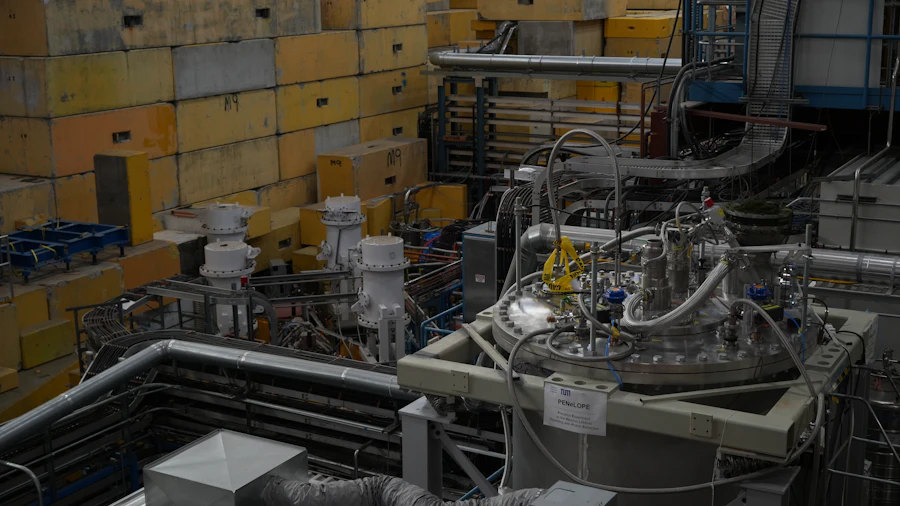
The Quiet Awakening at Kalpakkam
Deep within the high-security nuclear facility at Kalpakkam, on India's southeastern coast, a quiet, historic hum filled the control room on April 6, 2026. After twenty years of construction delays, technical setbacks, and intense international skepticism, the 500 MWe Prototype Fast Breeder Reactor (PFBR) attained first criticality. The chain reaction began. Unlike traditional thermal reactors that slowly consume rare uranium, this specialized facility is designed to breed more fuel than it burns. Three stages. Seventy years of patience. One critical breakthrough. It is the holy grail of India’s indigenous scientific program, originally mapped out by physicist Homi Bhabha in the 1950s.
Unlocking Stage Two of the Nuclear Blueprint
To understand why the Kalpakkam achievement is sending shockwaves through the global scientific community, one must look at the unique physics of a breeder reactor. The PFBR sits at the very centre of India's three-stage nuclear strategy, which is structured around several distinct technological steps:
- Squeezing the Fuel: The reactor uses a highly concentrated core of Uranium-Plutonium mixed oxide (MOX) fuel, surrounded by a blanket of depleted uranium-238 which slowly absorbs neutrons to transform into fresh plutonium.
- Liquid Sodium Engineering: Unlike standard reactors that use water, Kalpakkam uses highly reactive liquid sodium at 500 degrees Celsius to transfer heat, requiring flawless, leak-proof welding to prevent explosive contact with air or water.
- The Thorium Horizon: By mastering fast-breeder technology, India can finally transition to Stage Three: using its massive, domestic deposits of thorium-232 to produce uranium-233, creating a virtually endless loop of clean, carbon-free energy.
- Waste Minimization: By constantly recycling spent fuel through dedicated reprocessing plants, the fast-breeder loop drastically reduces the volume and half-life of high-level radioactive waste.
Breaking Free from the Uranium Straitjacket
The geopolitical implications of this milestone are immense. India holds only about two percent of the world’s known uranium reserves, a severe geological bottleneck that has historically forced the country to rely on expensive imports from Kazakhstan and Canada. No more relying on foreign uranium imports. No more generating unmanageable waste. No more pretending our thorium reserves are useless. By unlocking the fast-breeder loop, India is positioning itself to run its clean energy grid entirely on domestic soil, insulated from global supply chain disruptions. Seemingly, only Russia has successfully operated commercial fast-breeder reactors on this scale, making India’s achievement a major victory for indigenous Southern science.
The Long Road to 2047
While the criticality achievement is a massive triumph for BHAVINI, the state-run company managing the project, the path to commercial power generation remains complex. It will take several months of low-power testing and rigorous safety checks before the turbine can begin feeding electricity into the southern grid. Fast-breeder technology is notoriously difficult to run safely, and any minor sodium leak could trigger lengthy shutdowns. Yet, if Kalpakkam proves stable, it will provide the technical blueprint for a series of commercial breeder units across the country. It is arguably the most decisive step toward powering India's journey to become a fully developed, carbon-neutral nation by 2047.