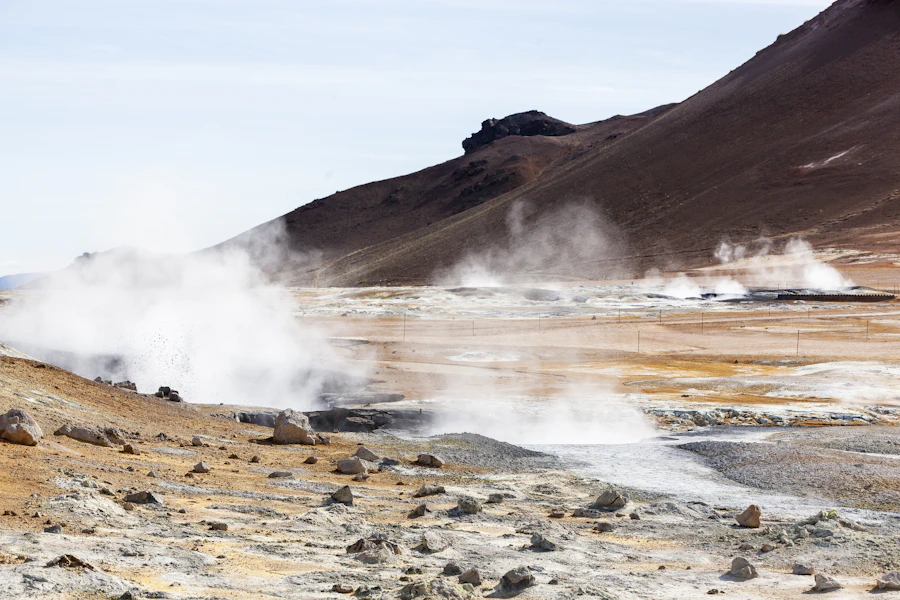
What is the Krafla Magma Testbed?
Headquartered in Reykjavik, the Krafla Magma Testbed (KMT) is an ambitious international project involving geoscientists from over a dozen countries. Following a major international symposium in May 2026, the consortium finalized its technological blueprints for the drilling phase. The target is a subterranean furnace located two kilometers beneath the basaltic crust. Two thousand meters down. Nine hundred degrees Celsius. Total darkness. That is where they are going. The objective is to build the world's first-ever permanent, in-situ magma observatory, turning a natural hazard into a scientific laboratory.
How does this drilling project actually work?
Most geothermal energy projects drill near magma chambers to tap heated water. However, the KMT mission is different; it is a deliberate, highly engineered approach to pierce the magma body itself. The operation is structured around three key engineering stages:
- The Heat-Resistant Shaft: Engineers will drill a 2.1-kilometer borehole directly into the active caldera, lining the tube with flexible, high-alloy steel designed to withstand extreme thermal expansion and acidic gases.
- In-Situ Sensor Placement: Specialized obsidian-shielded sensors will be lowered directly into the molten rock, recording continuous temperature, pressure, and chemical data.
- Supercritical Extraction: Water will be pumped down to the chamber's edge, heating it past its supercritical state (above 374 degrees Celsius and 220 bars of pressure) to run next-generation power turbines.
What is the scientific payoff?
The benefits of this experiment stretch far beyond simple academic curiosity. If successful, the KMT project will change how we interact with our planet's interior in three fundamental ways. First, it will overhaul volcano forecasting. No more guessing about volcanic eruptions. No more relying on remote seismic models. No more speculating on the viscosity of magma. Direct, real-time measurements will save thousands of lives worldwide. Second, it unlocks unprecedented energy. Supercritical water heated directly by magma holds up to ten times more energy than standard geothermal steam. A single well could power an entire city. Finally, understanding these subsurface thermal mechanics helps us grasp how rocky planets form and cool.
Why is this project incredibly risky?
Messing with an active volcano sounds like a screenplay for a disaster film, but volcanologists are confident they will not trigger an eruption. The pressure inside the Krafla chamber is surprisingly low, and the thick, viscous rhyolite magma behaves more like hot glass than explosive fluid. The real danger is financial and technological. Standard drilling tools melt like wax when exposed to extreme volcanic temperatures, requiring custom-manufactured, multi-million dollar drill bits. A single structural failure could trap the drill string, turning a historic scientific endeavor into an expensive, subterranean tomb. It is a bold, hazardous bet. But for the team at Krafla, the rewards are arguably worth the risk.