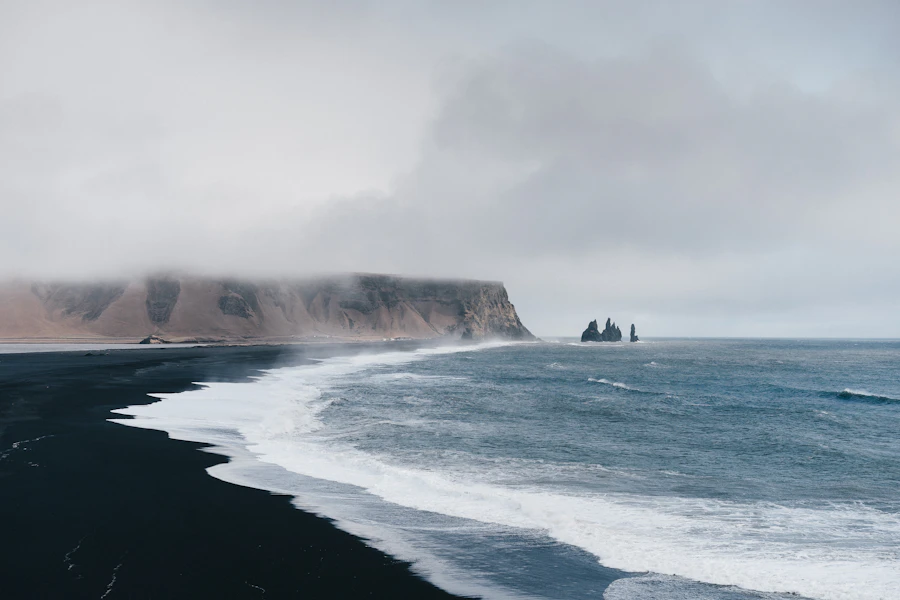
We are staring into an icy void, and we are doing it alone. In late 2025, our government did what few others have dared to do: we officially placed the potential collapse of the Atlantic Meridional Overturning Circulation (AMOC) on our National Security Council's agenda. It was a sobering moment of realization. For decades, the global climate conversation has focused entirely on a slow, linear warming. But nature does not always operate in straight lines. For us, climate change does not mean a tropical future. It means a frozen grave.
The science is as clear as it is terrifying. The massive conveyor belt of warm tropical water that keeps northern Europe’s winters mild is slowing down, diluted by a massive influx of fresh water from the melting Greenland ice sheet. Hildigunnur Thorsteinsson, our Director General at the Icelandic Meteorological Office, alongside Minister Guðlaugur Þór Þórðarsson, has been sounding the alarm across international panels. If this thermohaline engine stalls, the consequences will be immediate and catastrophic. Our winter temperatures could plunge by fifteen degrees Celsius within decades. A rapid, unpredictable freeze. This is not some distant threat for the year 2100. It is a clear and present danger to our national survival.
Let us be honest about what is at stake. An AMOC collapse is not just about needing warmer winter coats. It is an economic death sentence for our fisheries, the bedrock of our society. Our marine ecosystems would undergo a chaotic shift as the cold waters disrupt fish migration patterns. Our agriculture, already a delicate balancing act on volcanic soil, would freeze over. We watch the world debate emissions targets in comfortable, distant conference rooms while the very currents that make our island habitable are actively disintegrating. No ocean currents. No heat. No life. Just ice.
It is an existential dread that our youth already feel. In a recent talent show in Reykjavik, a group of teenagers performed a piece depicting future generations of Icelanders shivering in a frozen wasteland. Art is predicting our reality. We must act before the stage goes dark. Our Climate Council is pushing for concrete risk assessments and granular simulations, demanding a total overhaul of how we plan our long-term investments. But we cannot solve this within our borders. We are a small nation of four hundred thousand people, screaming into a global wind. If the international community continues to ignore our warnings, the North Atlantic will go quiet, and the ice will reclaim its ancient home.