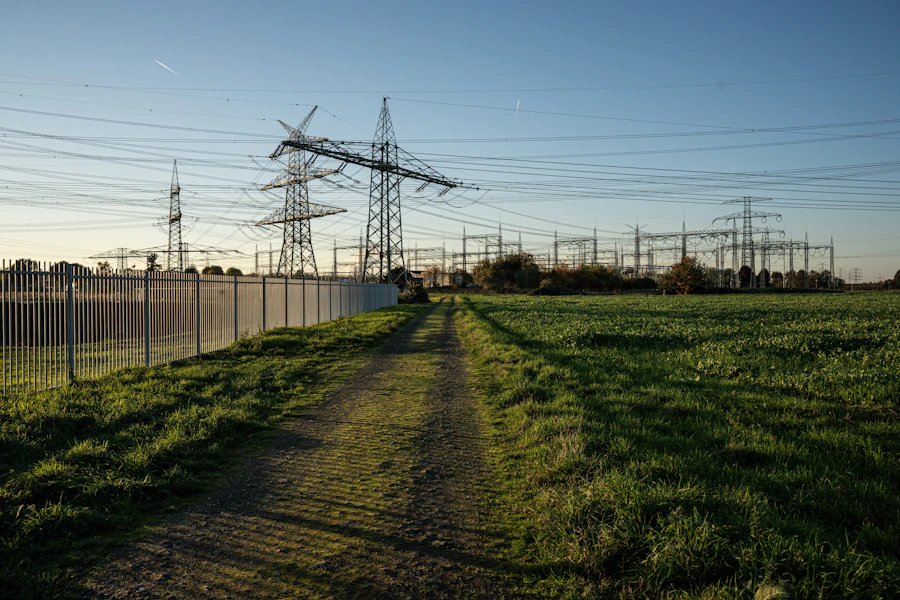
The numbers look good on paper. From 1 January 2026, the German federal government began subsidising electricity transmission grid fees to the tune of €6.5 billion. The gas storage levy — an extra charge buried in millions of household bills — was abolished on the same date. Electricity tax for manufacturing companies was cut to the EU minimum. Add it all up, and the government says citizens and businesses are receiving roughly €10 billion a year in energy cost relief, on top of €17 billion already provided through the assumption of the former renewables levy.
For an average household — 3,500 kWh of electricity, 20,000 kWh of gas per year — the saving comes to around €160 in 2026. New electricity contracts in January were already 6.7 percent cheaper, at 34.87 cents per kilowatt-hour. In Berlin and Brandenburg, grid fee reductions of up to 23 percent were recorded. The coalition called it a central delivery from the coalition agreement. Economy Minister Katherina Reiche (CDU) said 2026 would make energy noticeably cheaper.
She was not wrong. But the story has a second half.
In March, Handelsblatt surveyed six major electricity providers — E.ON, EnBW, EWE and others. None of them were passing the grid fee subsidy on to customers on fixed-price contracts. The reason: the law, as written, did not require them to. Fixed-price guarantees were explicitly excluded from the pass-through obligation. Smaller providers, who rarely offer price guarantees, said the exemption distorted competition in favour of the big players. Consumer groups were blunt about what this meant for millions of households locked into multi-year deals: the subsidy existed on paper, and nowhere else.
Then came the awkward detail. Reiche, before entering politics, was chief executive of Westenergie — one of Germany's largest regional energy companies, a subsidiary of E.ON. The accusation that she had shaped the legislation to protect large providers from pass-through obligations was made in print. Her ministry denied it. The debate did not go away.
For industry, the picture is cleaner. The EU approved Germany's new industrial electricity price — the Industriestrompreis — in April. The scheme targets a price of five cents per kilowatt-hour for energy-intensive companies across more than 90 sectors: chemicals, steel, glass, semiconductors. Companies buy electricity at the market rate and receive compensation covering half the average wholesale price. The German Trade Union Association (DGB) welcomed it but immediately called for an extension to ten years — the current scheme runs only to 2028. Industry groups said it was a start, not a solution.
The broader context matters. German electricity prices remain among the highest in Europe. Between 2020 and 2025, grid fees for households rose by around 47 percent. The 2026 relief package claws back some of that — but not all of it, and not for everyone. The Bundestag voted in November 2025 to review the grid fee subsidy arrangement in 2027. Whether it continues beyond this year is an open question. Fiscal pressure is real, and the Climate and Transformation Fund — which finances the €6.5 billion subsidy — is not infinitely deep.
Reiche has also been candid about something her predecessor was not: she thinks the 2023 nuclear phase-out was a mistake. She is pushing for new gas-fired power plants as a bridge technology. The Greens, who voted against the grid fee subsidy bill in the Bundestag, call this a retreat from the Energiewende. The government calls it pragmatism.
Renewables hit 55 percent of German electricity generation in the first quarter of 2026 — a record. The grid is expanding. The targets for 2030 are still on the books. But the politics of the energy transition have shifted. The Merz government is not dismantling it. It is repricing it, and making different choices about who bears the cost along the way.
For now, the relief is real — if uneven. A household that switched suppliers in January is paying less. A household locked into a fixed-price contract with E.ON is not. The gap between the headline figure and the lived experience is, in Germany as elsewhere, where the interesting politics live.