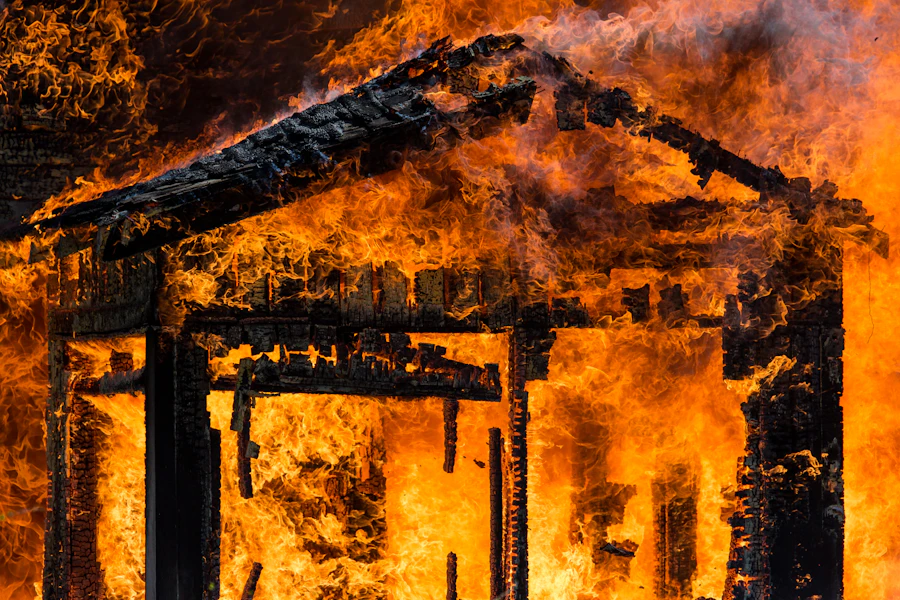
On January 16, 2026, fires broke out simultaneously across Chile's Biobío and Ñuble regions, driven by temperatures exceeding 38°C, months of drought, and winds gusting at 40 to 50 kilometres per hour. Within days, 75 separate blazes were burning. By January 23, more than 64,000 hectares had burned nationwide — an area roughly the size of Chicago. At least 23 people were killed. More than 52,000 were forced to evacuate. The towns of Lirquén and Penco were largely destroyed. Entire neighbourhoods of the city of Concepción were reduced to ash. The Chilean government declared a state of catastrophe and deployed nearly 3,000 firefighters, but for days the fires remained uncontrolled.
The fires were not a surprise, exactly. Chile has been living through what scientists call a "megadrought" for 14 consecutive years. A World Weather Attribution study published in March found that the hot, dry, and windy conditions that drove the disaster were made roughly three times more likely by human-caused climate change. The same study noted that the expansion of non-native pine and eucalyptus plantations — highly flammable monocultures that have replaced native forests across central Chile — has created landscapes that burn faster and hotter than the ecosystems they displaced. The 2026 fires burned more than three times the area consumed by Chilean wildfires in all of 2025.
The country Kast inherited
The fires struck while Chile was between governments — outgoing leftist President Gabriel Boric and incoming conservative President-elect José Antonio Kast both visited the disaster zone in the final days of January, a rare moment of political unity in a deeply divided country. What the fires revealed was a Chile that had spent four years building one of Latin America's most ambitious climate frameworks, and was now handing power to a government with a fundamentally different philosophy toward environmental regulation.
Under Boric, Chile had accelerated its coal phase-out — retiring more than 1.2 gigawatts of coal capacity since 2019, with another nine plants committed to retirement by 2026 — and expanded renewable energy so rapidly that it went from 46% to 70% renewable electricity in just five years. The 2022 Climate Change Framework Law set a legally binding net-zero target for 2050 and required every ministry to produce a sectoral mitigation and adaptation plan. Chile ranked 7th in the 2026 Climate Change Performance Index, one of the highest-performing countries in the world. Climate Action Tracker rated Chile's overall approach "Almost sufficient" — one of the few countries globally to earn that designation.
43 decrees, one day after taking office
On March 12, 2026 — his second full day as president — Kast ordered the suspension of 43 environmental protection decrees that had been signed during the Boric government and were still under review by the Comptroller General's Office. The suspended measures covered a wide range of protections: regulations on emissions from thermoelectric and smelting plants, decontamination plans for bodies of water including Lake Villarrica, the creation of new national parks, and protections for species including Darwin's frog and the Humboldt penguin. Kast's stated rationale was that the decrees required review — that his government would evaluate each one on technical and economic merits rather than what he described as "environmental ideology." "We want to generate the best possible public policy around full employment, always respecting the environment," he said.
Environmental groups called it an "environmental chainsaw." On World Water Day, March 22, thousands of people marched in Santiago and 14 other Chilean cities under the slogan "Don't 'Kast-igate' Nature," organized by coalitions including the Movement for the Defense and Access to Water, Land and the Environment. Protest organizers pointed out that 1.4 million Chileans still lack access to drinking water — in a country already in its fourteenth consecutive year of megadrought — and that rolling back emissions regulations on thermoelectric plants was an especially strange response to a wildfire season driven partly by a heating, drying climate.
The tension at the heart of Chilean climate politics
Kast is not a climate denier. He acknowledged climate change during the campaign and has not proposed withdrawing from the Paris Agreement or repealing the 2022 Climate Change Framework Law. His position is closer to an economic deregulation argument: that environmental rules have accumulated faster than the economy can absorb them, that growth — particularly mining, energy, and agriculture — must be prioritized to fund the social spending Chileans expect, and that regulatory frameworks should be built on technical criteria rather than what he calls political environmentalism.
That position will be tested by a climate that is not waiting for the politics to resolve. Chile's megadrought has intensified pressure on freshwater resources across most of the country. Demand for groundwater already exceeds sustainable supply in most regions. Wildfires are becoming more severe and more frequent. The eight remaining coal plants — representing nearly two gigawatts of capacity — have not committed to any retirement date before 2040, and the Kast government has given no indication it will push them to close sooner. Former President Boric had proposed an accelerated 2035 coal phase-out; that proposal now has no political vehicle.
What 2026 has made clear
Chile's situation in 2026 illustrates a tension playing out across Latin America and beyond: the countries most physically exposed to climate change are often the same countries where economic pressures, political realignments, and institutional fragility make sustained climate action hardest to maintain. Chile built a serious climate framework under Boric. Whether that framework survives the Kast years with its binding targets and regulatory teeth intact — or whether it becomes a legally impressive document that a new government systematically hollows out through deregulation — is the defining environmental question the country faces heading into the second half of the decade.