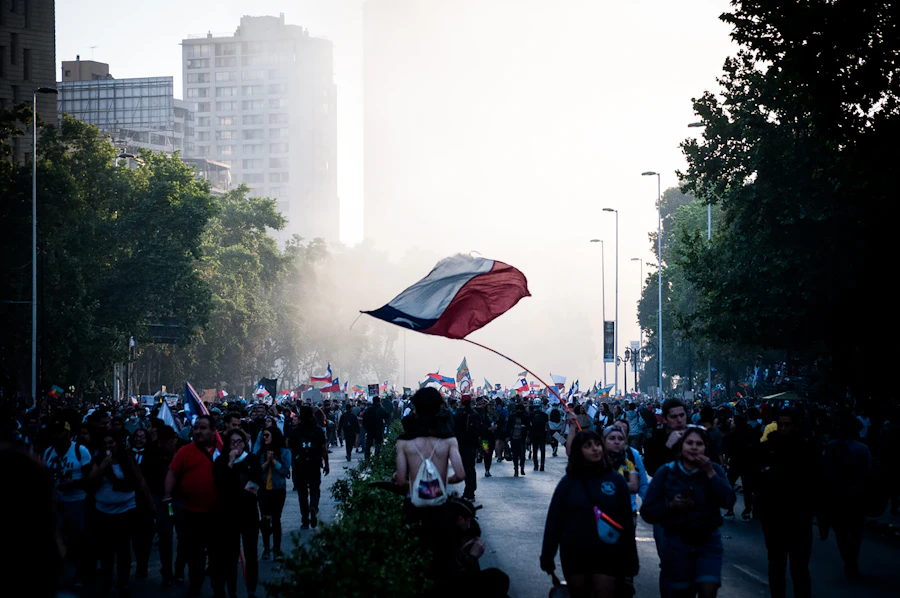
On March 11, 2026, José Antonio Kast was inaugurated as Chile's president at the National Congress building in the coastal city of Valparaíso, in front of an audience that included Argentine President Javier Milei, Panama's José Raúl Mulino, Ecuador's Daniel Noboa, and Spain's King Felipe VI. The ceremony was followed, that same night, by the signing of three migration-focused executive decrees. Kast then stood before the commander of the Chilean Army and ordered him to begin building physical barriers along the Bolivian border immediately — without waiting for the decrees to be published in the official gazette. Chile's most conservative president since the return to democracy in 1990 was not wasting time.
Who Kast is, and how he got here
Kast, a 60-year-old lawyer and the father of nine children, has spent more than three decades in Chilean politics occupying the far right of a political spectrum that already includes a robust establishment right. He voted against the legalization of divorce and even limited abortion access during his years in congress. He has described Pinochet's dictatorship in admiring terms throughout his career — and in 1988, as a young man, he actively campaigned to keep Pinochet in power in the pivotal plebiscite that ended the regime. His father, Michael Kast, was born in Germany, was a member of the Nazi Party, and emigrated to South America after the war. Kast has never disavowed these family connections, though he has sought to minimize their political relevance.
None of this prevented him from winning the December 2025 runoff election by more than 16 percentage points — 58% to 42% — over Jeannette Jara, a Communist Party candidate who had served as labor minister under outgoing leftist President Gabriel Boric. The margin was not close. It was a landslide, and it reflected something real about where Chilean public opinion has moved.
What drove the vote
The honest answer is not nostalgia for dictatorship. Analysts who study Chilean politics are consistent on this point: what drove voters to Kast was a hunger for order in a country that has watched crime statistics — particularly kidnappings and organized crime linked to irregular migration — worsen over the past decade. Kidnappings rose 135% between 2015 and 2025. Homicides peaked in 2022. Chile remains one of the safer countries in Latin America by regional standards, but Chileans do not measure their security against Venezuelan or Colombian baselines — they measure it against what Chile used to be, and the gap has felt increasingly large. An Ipsos poll before the election found 63% of Chileans citing safety as a top priority, a figure higher than in Mexico or Colombia despite those countries having homicide rates four times Chile's own.
Chile's foreign-born population doubled between 2017 and 2024, from roughly 4% to nearly 9% of the total population. An estimated 337,000 people live in the country without legal documentation. Kast's campaign linked this migration surge directly to rising crime — a connection that criminologists dispute as oversimplified, but that resonated with an electorate that felt the government wasn't listening to its concerns.
The first weeks in power
Kast moved faster than almost any new Latin American president in recent memory. On his first night in office he signed three immigration decrees. Within a week he was at the Chacalluta border crossing overseeing preparations for a physical barrier. In April, his government conducted its first deportation flight, sending 40 foreign nationals back to Bolivia, Colombia, and Ecuador from the northern city of Iquique. Officials described the flight as the first in a series, with more than 44,000 people currently eligible for deportation under existing orders. He also suspended a decree from the Boric administration that would have regularized 182,000 people who had entered Chile irregularly.
His first foreign trip, meanwhile, was to Buenos Aires to meet Milei — a visit in which Kast formally backed Argentina's sovereignty claim over the Falkland Islands and the two leaders discussed security cooperation and the extradition of a former guerrilla leader. The ideological alignment between Santiago and Buenos Aires is now the defining axis of the South American right.
The constraints he faces
Kast does not have a congressional majority. His Republican Party and allied right-wing parties won 76 of 155 lower house seats in the November 2025 elections — enough to block the left, but not enough to pass legislation alone. His signature promises — mass deportations, extended detention periods for migrants, new prison construction, cuts of $6 billion in public spending within 100 days — all require either congressional cooperation or creative use of executive power. Some cabinet members previously served as lawyers defending members of the Pinochet regime, a fact that has drawn sustained criticism from human rights organizations and given the political opposition a consistent line of attack.
The practical obstacles to mass deportation are also significant. Venezuela, the origin country of a large share of Chile's undocumented population, has historically been unwilling to accept large-scale forced returns. Building the infrastructure to detain and process tens of thousands of people before sending them home requires legal changes, diplomatic agreements, and logistics that take time to assemble — none of which fit neatly into a first-hundred-days narrative.
What his presidency means for the region
Chile's rightward turn is part of a broader pattern across Latin America, where voters in Argentina, Bolivia, Ecuador, and now Chile have elected or elevated leaders who explicitly reject the progressive consensus of the early 2020s. Kast, Milei, Bukele — the leaders he visited and admired during his campaign — represent different national contexts but a shared rhetorical register: the state has failed to protect its citizens, the left has prioritized ideology over safety, and only an "emergency" approach will restore order. Whether that approach delivers in Chile, or whether it collides with congressional arithmetic, human rights law, and the operational limits of mass deportation, will be one of the defining political stories of 2026 in Latin America.