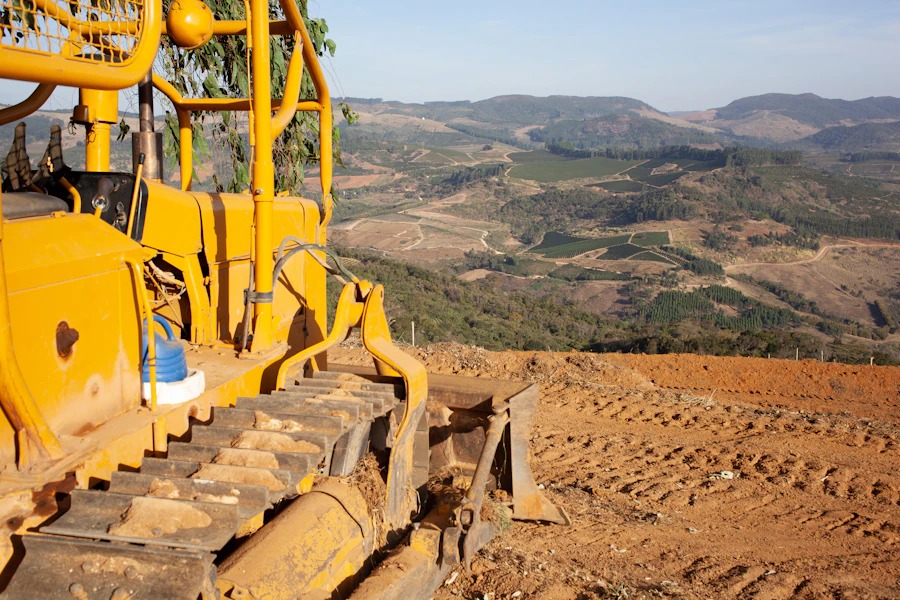
Beneath the red soil of Goiás, Minas Gerais and Bahia lies a resource that has become one of the defining strategic assets of the clean-energy era. According to the U.S. Geological Survey, Brazil holds 21 million tonnes of rare earth reserves — the second-largest confirmed inventory on Earth, trailing only China's 44 million tonnes. Yet in 2025, Brazilian mines produced just 2,000 metric tonnes of rare earth elements, a rounding error next to the country's underground wealth. The gap between what Brazil has and what Brazil can actually turn into a usable product is now the central problem its scientists are trying to solve.
Why this matters beyond Brazil
Rare earths are a group of 17 metallic elements essential to manufacturing high-technology products: electric vehicle motors, wind turbines, smartphones, and defense systems all depend on them. China currently dominates not just mining but, more importantly, the refining and magnet-manufacturing stages of the supply chain — the part of the process that actually creates economic and strategic value. For Western governments trying to reduce dependence on Chinese supply, Brazil's deposits look like one of the few credible alternatives at scale.
That calculation became concrete in April 2026, when USA Rare Earth agreed to acquire Serra Verde Group — the only rare earth mine in the Western Hemisphere producing all four magnetic rare earth elements — in a deal valued at roughly $2.8 billion. Serra Verde's deposits are ionic clay formations, the same geology that gives southern China its dominance in heavy rare earths like dysprosium and terbium, the two elements most critical for high-performance magnets used in EV motors and wind turbines. Until now, Serra Verde's concentrate has been shipped to China for separation under a processing arrangement set to expire at the end of 2026 — after which output is expected to shift toward Western separation capacity, assuming that capacity exists.
The science Brazil still doesn't have
That "assuming" is the crux of the problem, according to Fernando Landgraf, a professor at the University of São Paulo's engineering school and one of the country's leading rare earth researchers. Speaking at FAPESP Week London in June 2026, Landgraf laid out the unresolved technical steps: Brazil must first build separation and refining facilities capable of isolating individual rare earth elements from ore concentrate, then master the manufacture of high-power permanent magnets — products that, properly made, retain their magnetic strength for decades. Neither capability currently exists at scale in Brazil.
Part of the difficulty is that the knowledge isn't transferable on request. China has spent decades refining these processes and, in Landgraf's words, does not publish much on the subject — making it difficult for Brazilian scientists to learn from Chinese experience even informally. Partnerships with American or European research groups are technically possible, but Landgraf noted they inevitably become geopolitical negotiations rather than straightforward scientific exchanges. He sees more promise in cooperation with the United Kingdom, where researchers at the University of Birmingham have a long track record in magnet manufacturing specifically.
The institutional effort already underway
Brazil isn't starting from nothing. In 2014, FAPESP — the São Paulo Research Foundation — and the National Council for Scientific and Technological Development created the National Institute of Science and Technology for the Processing and Application of Rare Earth Magnets (INCT Pátria), a research network coordinated by Landgraf and aimed at mastering the full production cycle for supermagnets. That effort has since been renewed and broadened through the newly launched INCT Matéria, which brings together 15 institutions to develop rare-earth applications specifically for the energy transition, coordinated by Professor Sergio Michielon of the Federal University of Amazonas. A separate thematic research program backed by R$73 million in funding is explicitly aimed at consolidating Brazil's domestic supply chain — from mining through to finished magnet products.
Even with that infrastructure, the scale mismatch is stark: Landgraf estimates that combined rare-earth carbonate production from major Brazilian mining companies — around 20,000 tonnes per year — meets less than 6% of what would be needed to fully exploit the country's potential role in global supply.
An unresolved environmental question
Technical capability is only half the constraint. Landgraf has also been explicit that any viable Brazilian rare-earth industry needs a long-term federal policy governing exploration, extraction, and refinement that is built around environmental sustainability criteria from the outset — not retrofitted afterward, as happened in other extraction-heavy sectors. Rare earth separation in particular is a chemically intensive process involving acids and produces radioactive byproducts, including thorium, that require careful handling. How Brazil resolves that tension, between scaling up quickly to capture a geopolitical opportunity and building the kind of sustainable process it has spent over a decade researching, is likely to shape whether the country's reserves translate into industrial reality or remain, as they have for years, mostly underground.