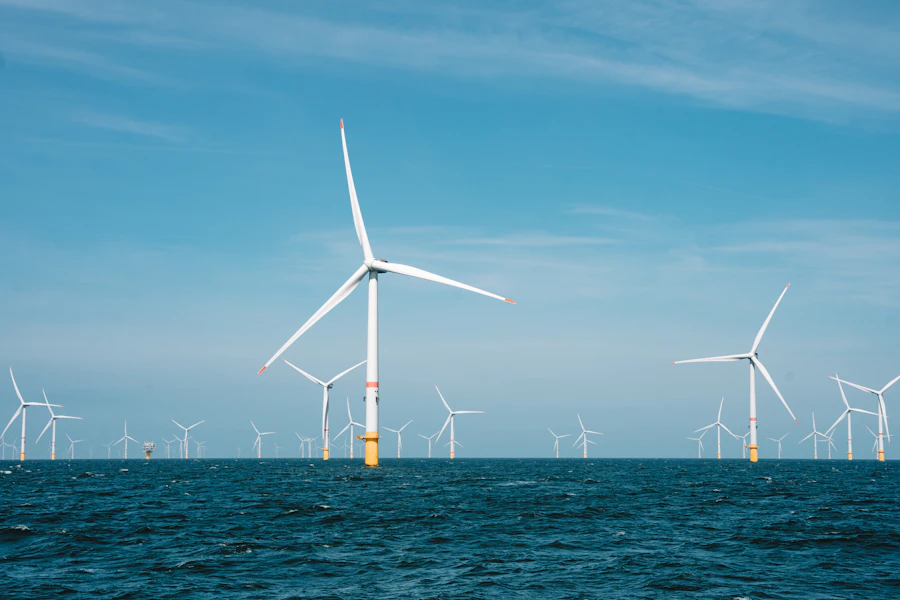
Brazil already runs one of the cleanest large power grids in the world: renewables supply roughly 85% of national electricity, with hydropower as the backbone and solar and wind together contributing close to a quarter of generation. What the country doesn't have yet is a single operating offshore wind turbine — despite sitting on a coastline that energy planners increasingly describe as one of the best offshore wind resources on the planet.
The scale of what's waiting
The numbers involved are large enough to be almost abstract. Brazil's federal environmental agency, IBAMA, is currently reviewing roughly 100 GW worth of offshore wind project applications — and the country's total technical offshore potential has been estimated at 697 GW, more than three times the installed capacity of every power plant in Brazil combined. The northeastern coast is the epicenter of this interest: unidirectional winds blow nearly year-round, the continental shelf is unusually shallow for long stretches offshore, and existing port infrastructure in states like Ceará and Rio Grande do Norte gives developers a logistical head start that newer offshore wind markets elsewhere in the world don't have.
Major international players have already lined up. Ocean Winds — a joint venture between Portugal's EDPR and France's ENGIE — is seeking approval for five projects totaling 15 GW. TotalEnergies, EDF, Equinor, and Iberdrola subsidiary Neoenergia have all filed licensing applications. Petrobras, Brazil's state oil major, has gone furthest among domestic players: it commissioned a geotechnical site survey for an 18 MW pilot project off Rio de Janeiro, the first offshore wind development in South America to enter a formal environmental licensing process, with construction-stage data expected through 2027.
What's actually missing: the rulebook
None of this can move past the application stage without a functioning regulatory framework — and that's where Brazil has fallen behind its own ambitions. The Offshore Wind Law was signed in January 2025 after roughly four years of legislative back-and-forth, dating to an original bill drafted in 2021. But a law establishing the general framework is not the same as the operational rules developers need: seabed lease terms, auction mechanics, and environmental criteria for site selection. Those details were supposed to arrive via a presidential decree.
That decree has been delayed repeatedly. The Ministry of Mines and Energy opened a public consultation on site-selection methodology in July 2025; by October, companies that had submitted input said their contributions hadn't even been reviewed yet. That same month, the National Energy Policy Council created a dedicated working group to keep regulating the sector — with a 270-day deadline, meaning the decree wouldn't be presented until the first half of 2026 at the earliest. As of mid-2026, the first commercial offshore wind auction — the event that would actually let companies bid for seabed rights and begin construction — has been pushed to 2027.
Why the delay matters more in an election year
Brazil holds general elections in October 2026, and every additional month of regulatory limbo carries a cost that compounds: industry analysts estimate Brazil is losing access to a global offshore wind investment market that moves tens of billions of dollars annually while the rules remain unsettled. Some estimates put the potential investment at stake as high as R$900 billion (roughly $170 billion) over the next decade if the sector develops as planned — money that would also fund a domestic industrial chain spanning shipyards for turbine foundations, specialized installation vessels, and blade and tower manufacturing, the kind of skilled-labor buildout that early movers like the United Kingdom captured for their own economies.
The demand question nobody has fully answered
There's a deeper strategic question hovering over the regulatory delay: does Brazil actually need offshore wind, given how clean its grid already is? Industry analysts note that offshore wind will initially generate at a higher cost than Brazil's abundant onshore wind and solar, and the country must build an entirely new submarine cable and grid-connection infrastructure to use it at all. The answer most planners have converged on is green hydrogen. Surplus offshore generation could power electrolyzers producing hydrogen for export — and the Pecém Green Hydrogen Hub in Ceará is already attracting commitments of up to $18 billion from investors including Fortescue, backed by World Bank financing, aimed at supplying European hydrogen import corridors by the early 2030s. That export-oriented case is what's kept developer interest high even as the actual auction keeps slipping further down the calendar.