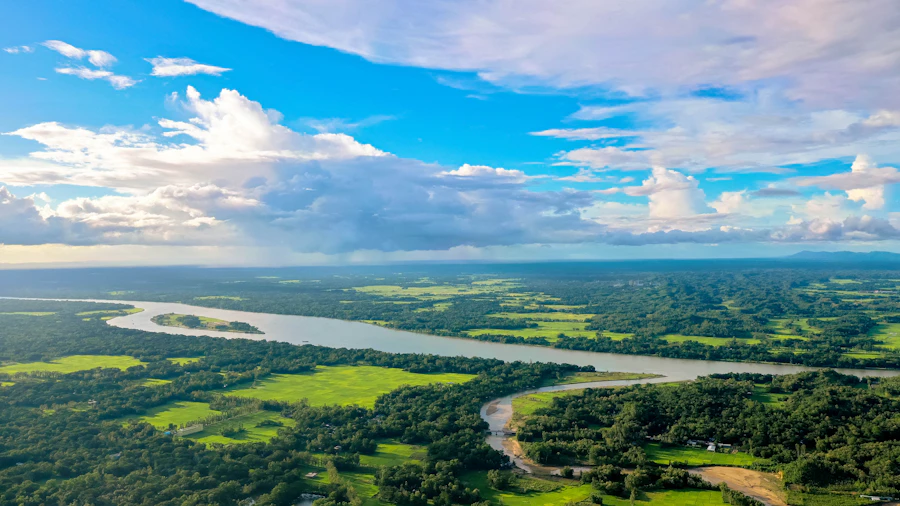
For more than four decades, Bangladesh and India have failed to agree on how to share the waters of the Teesta River. The river flows from the Himalayas through India's West Bengal before entering Bangladesh's northern plains, where millions of farmers depend on it for irrigation — and where catastrophic floods follow every monsoon. Forty years of negotiations have produced nothing binding. Then, in June 2026, Bangladesh's new Prime Minister Tarique Rahman flew to Beijing, and the Teesta question suddenly had a new answer.
The Beijing visit
Rahman's four-day trip to China from June 22 to 26 was his first official overseas visit since the Bangladesh Nationalist Party won the country's first free and fair election in nearly two decades in February 2026. The visit was, by any measure, substantial. Rahman met President Xi Jinping, Premier Li Qiang, and the chairman of the National People's Congress. Fifteen memorandums of understanding were signed, along with two formal agreements and a 16-point joint communiqué. Xi told Rahman that China would remain Bangladesh's "trusted friend" and backed Dhaka's ambitions to join BRICS and the Shanghai Cooperation Organisation. In a symbolic flourish, the BNP and the Communist Party of China signed a party-to-party MoU — an unusual step that underscored the breadth of the relationship both sides wanted to project.
But the single outcome that reverberated most loudly across the region was China's formal commitment to support the Teesta River Comprehensive Management and Restoration Project — a multi-billion-dollar scheme to dredge, embank, and modernise the river's management entirely within Bangladeshi territory.
Why the Teesta matters
The Teesta is not just a river. In Bangladesh's northern districts it is the difference between agricultural viability and ruin. During the dry season, water shortages cripple crops; during the monsoon, the same river delivers devastating floods. The restoration project aims to tame both extremes through dredging, reservoir creation, embankment construction, and irrigation modernisation. Because the works are confined to Bangladeshi soil, they sidestep the fraught question of transboundary water sharing — technically, Bangladesh is not asking India to release more water. Practically, Chinese engineers and state-owned enterprises would be operating in close proximity to the Siliguri Corridor, the narrow strip of Indian territory that connects the country's northeastern states to the rest of the country — a chokepoint Indian military planners have always viewed as acutely vulnerable.
Indian security analysts have not missed the significance. China's foreign ministry spokesman Guo Jiakun took the unusual step of explicitly addressing New Delhi's anxieties at a press conference on the final day of Rahman's visit, insisting that China-Bangladesh cooperation "is not directed against any third party." The very fact that Beijing felt the need to say so speaks to how charged the moment is.
A carefully calibrated pivot
Bangladesh's new government has been careful not to frame its China outreach as a rejection of India. Rahman's trip included a stop in Malaysia before Beijing, a signal that Dhaka is not simply trading one patron for another. Bangladeshi officials have described the Teesta project in strictly humanitarian and economic terms — flood prevention, agricultural productivity, water security for northern farmers. Indian Foreign Secretary Vikram Misri visited Dhaka in May and announced the restoration of more than 40 bilateral mechanisms that had fallen dormant under the previous interim government, suggesting both sides are working to manage the friction.
But the underlying dynamic is unmistakable. India backed Sheikh Hasina's government for fifteen years, and when the student uprising of 2024 toppled her, New Delhi was left exposed — its favoured partner gone, its influence in Dhaka diminished overnight, and a BNP government with deep historical grievances against India now in power. The Teesta is the sharpest expression of those grievances: a resource Bangladesh needed and India could never quite deliver, now being offered by China instead.
Walking the tightrope
For Bangladesh, the strategic calculus is not about choosing Beijing over New Delhi. It is about extracting maximum benefit from both. China is already Bangladesh's largest source of development finance and primary military supplier. India remains its most critical geographical neighbour, largest trading partner by land, and the country through which most of Bangladesh's transit trade flows. Neither relationship can be sacrificed. As one Bangladeshi analyst put it, the real lesson of the Rahman visit is not that Bangladesh is leaning toward China — it is that Bangladesh has finally found enough leverage to make both giants take it seriously at the same time. Whether it can sustain that balance, as Chinese engineers move into its northern river basin and Indian border tensions simmer, is the question that will define Bangladeshi foreign policy for years to come.