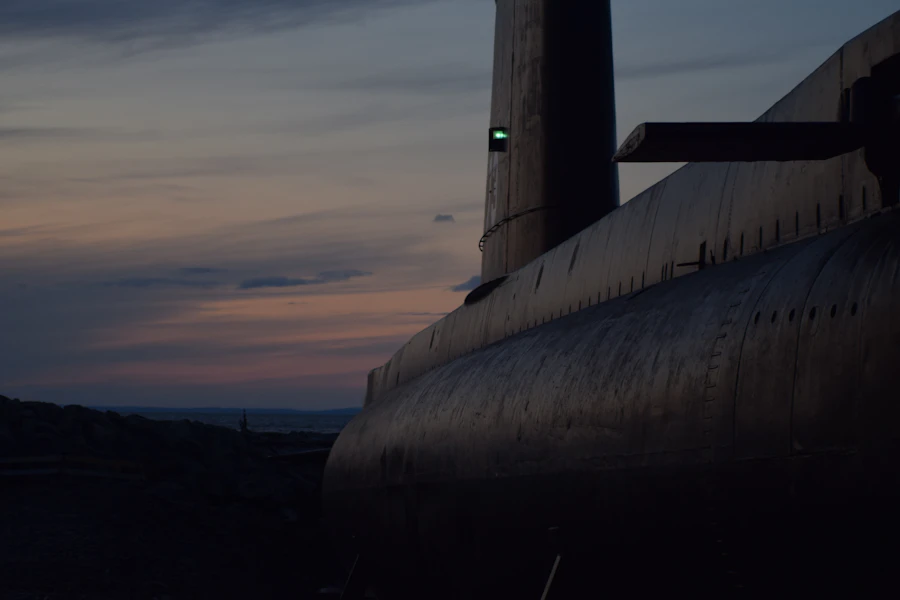
Australia's pursuit of a nuclear-powered submarine fleet under the AUKUS partnership with the United States and the United Kingdom has moved from planning into physical construction in 2026, even as the exact shape of the program continues to be negotiated between the three allies.
A revised submarine pathway
At a meeting in Singapore on May 30, 2026, Australian Deputy Prime Minister and Defence Minister Richard Marles, U.S. Defense Secretary Pete Hegseth and UK Defence Secretary John Healey announced changes to the original 2023 submarine roadmap. Under the original plan, Australia was due to receive at least three Virginia-class attack submarines beginning in 2032 — two transferred from the existing U.S. Navy fleet and one newly built. Under the revised arrangement, all three submarines will instead come from the existing U.S. Navy inventory, with no newly built boat included.
The change eases pressure on U.S. shipyards, which have struggled to produce Virginia-class submarines fast enough to meet both American fleet requirements and AUKUS commitments, but it also means Australia's future submarines will have less remaining reactor life than a newly built boat would have offered. The same Singapore meeting confirmed that Submarine Rotational Force-West (SRF-West), which will host rotating deployments of U.S. and UK nuclear-powered submarines, remains on track to stand up at HMAS Stirling in Western Australia in 2027, and launched the first AUKUS Pillar II project focused on autonomous underwater vehicles.
Building the yard
Australia is also building the infrastructure to eventually construct its own submarines domestically. Prime Minister Anthony Albanese announced a AU$3.9 billion (roughly US$2.75 billion) initial investment in February 2026 to begin full-scale construction of a new submarine yard at Osborne, South Australia. The completed facility is projected to cost AU$30 billion in total, with a fabrication hall alone stretching 420 metres and using some 126,000 tonnes of structural steel — about ten times the floor area of the existing Osborne South yard. South Australian Premier Peter Malinauskas called the project central to "one of the most significant defence undertakings in our history."
The Osborne yard is intended to eventually build the SSN-AUKUS class, a next-generation nuclear-powered attack submarine being developed jointly with the UK, with Australian assembly expected to begin in the early 2030s and deliveries to the Royal Australian Navy projected for the early 2040s.
Training and early visits
Ahead of SRF-West's 2027 start date, Australian personnel have already begun working directly with allied nuclear submarines. In February 2026, the UK's HMS Anson became the first British nuclear-powered submarine to undergo maintenance on Australian soil, arriving at HMAS Stirling for a maintenance period involving around 100 personnel from the Royal Navy, the UK Submarine Delivery Agency, the Royal Australian Navy and other partners — building on earlier work with the U.S. submarines USS Vermont and USS Hawaii. Marles said the visit would "build confidence in our strategic partners that we have the workforce able to deliver AUKUS submarines."
More than 50 Australians are now embedded within the UK's defence nuclear enterprise, and the Royal Navy has provided offshore nuclear safety training to over 950 Australian Submarine Agency personnel, according to the Australian Department of Defence. In June 2026, the U.S. Navy reactivated Submarine Squadron 3 in Western Australia as a forward command element to help coordinate maintenance and logistics for SRF-West, with around 20 Australian civilian maintainers and 25 Royal Australian Navy personnel having already completed training at Pearl Harbor and more than 230 additional Australians under instruction there.
What it costs
The scale of the financial commitment is substantial. Australia's 2026 Integrated Investment Program projects total spending on the nuclear submarine program of between AU$71 billion and AU$96 billion through 2036, up from a previous estimate of AU$53–63 billion. The country's overall defence budget for the 2026–27 fiscal year was set at AU$62.6 billion (around US$45.2 billion), equivalent to 2.02 percent of GDP, with the government aiming to lift that to 3 percent of GDP by 2033. The Australian Submarine Agency alone will receive AU$512.5 million for the coming year, a 33 percent increase on its current budget, as it grows its staff toward an expected 1,209 people in the 2026–27 fiscal year.
Defence Minister Marles has defended the scale of the investment as a matter of "self-reliance" amid a more contested strategic environment, writing that "the cost of AUKUS Pillar 1 is significant, [but] it pales in comparison to the costs of a war in our region."