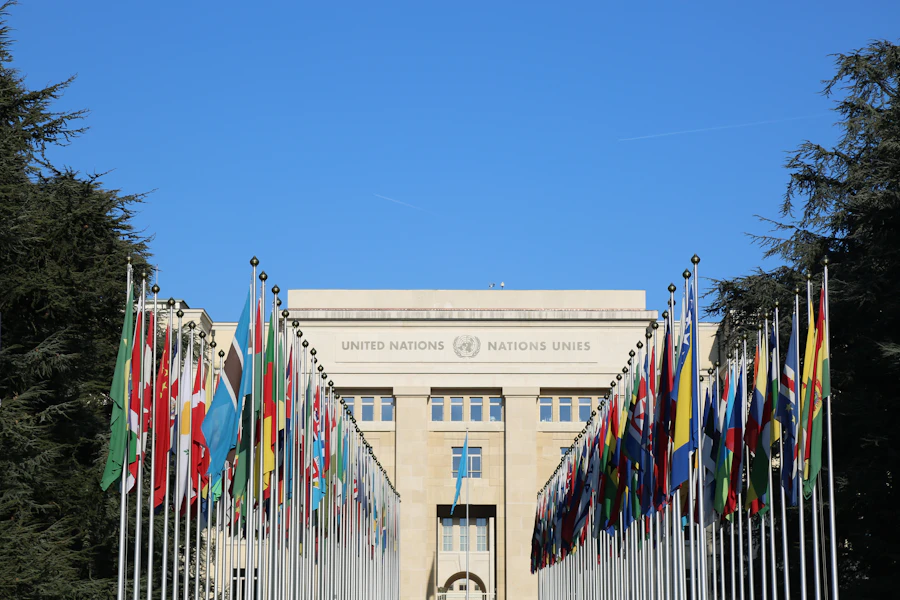
Argentina's withdrawal from the World Health Organization took effect on March 17, 2026, exactly one year after Foreign Minister Pablo Quirno notified the United Nations Secretary-General of the country's intent to leave. Quirno confirmed the completion on social media, stating that Argentina "will continue to promote international cooperation in health through bilateral agreements and regional forums, while fully preserving its sovereignty and its capacity to make decisions regarding health policies." The move follows the United States' own WHO exit, formalised two months earlier under President Donald Trump.
President Javier Milei has been a longstanding critic of the WHO's handling of the Covid-19 pandemic, at one point calling the organisation "nefarious" and describing its pandemic-era guidance as "the greatest experiment in social control in history." Health Minister Mario Lugones echoed that framing after the World Health Assembly noted the withdrawal in May, writing that the pandemic "taught us a lesson we cannot ignore" and that Argentina was "regaining health sovereignty." He confirmed the country would keep coordinating with the Pan American Health Organization (PAHO) on vaccine and medicine procurement through its Revolving and Strategic Funds.
Criticism and open legal questions
The decision has not gone unchallenged. According to Euronews, the announcement drew criticism from local health experts, who called the measure an "aberration" from a public health standpoint, while the government maintained it would grant more flexibility and sovereignty in setting health policy.
There is also a live legal dispute over the withdrawal itself. Unlike the United States, which reserved an explicit right to leave the WHO when it joined in 1948, Argentina has no such reservation and is relying on a Vienna Convention argument instead. WHO Director-General Tedros Adhanom Ghebreyesus stated in a report to the organisation's executive board in January 2026 that "the purported notification of withdrawal by Argentina should not be accepted as effective." The executive board nonetheless recommended that the World Health Assembly acknowledge the withdrawal, which it did in May — a move that international law scholars writing in EJIL:Talk! and Think Global Health have described as the board overriding its own Secretariat's legal advice without clear precedent.
The Buenos Aires Times reported that leaving the WHO means Argentina loses direct access to technical support programmes, funding channels and decision-making forums, reducing its influence over global health policy, and cited public health experts warning that operating outside the WHO framework could complicate coordination during future cross-border health emergencies. Think Global Health pointed to a concrete example: a hantavirus cluster aboard a cruise ship departing an Argentine port in early 2026 raised unresolved questions about which agency, PAHO or WHO, held jurisdiction for outbreak notification while the country's membership status was still contested.
Argentina has continued some multilateral health engagement on other fronts even as it exits the WHO: in March 2026, Lugones signed the country onto the Alliance for Primary Health Care in the Americas (AxAPS), a joint initiative of PAHO, the World Bank and the Inter-American Development Bank.