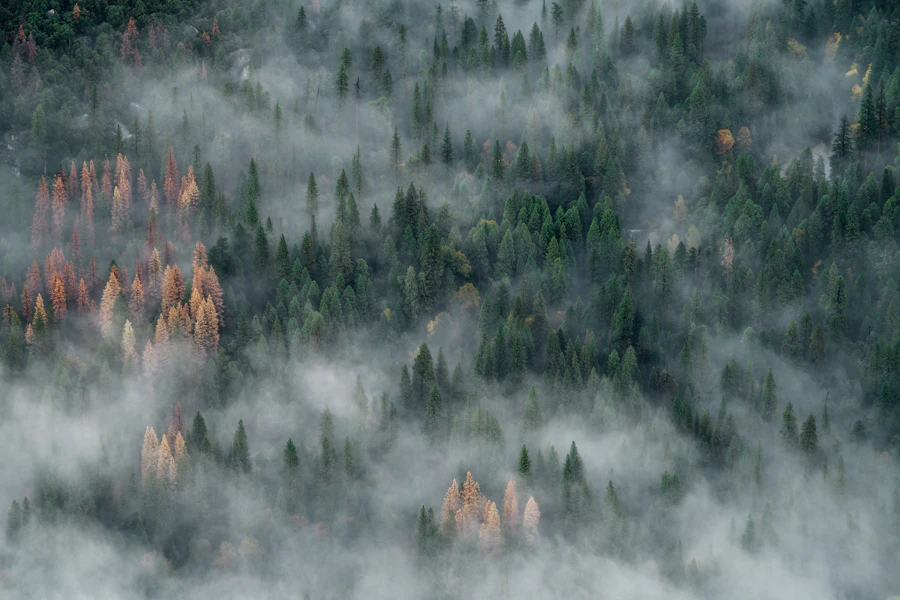
By the numbers Brazil is most proud of, the Amazon has never looked better. Clear-cut deforestation in the Legal Amazon fell to 5,796 square kilometers in the year ending July 2025 — an 11% drop and the lowest annual figure since 2014. But inside that same reporting period, researchers tracking the rainforest found something the headline number didn't capture: fire, not the chainsaw, has become the primary way forest disappears in Brazil, and the country's monitoring systems were never built to count it the same way.
The numbers underneath the numbers
In 2024, Brazil lost 2.78 million hectares of primary forest — the highest figure since 2019 — and roughly 60% of that loss came from fire, which burned through six times more forest than the year before. That statistic doesn't appear in Brazil's official deforestation tally, because, as in most countries, that tally tracks clear-cutting specifically, not burning. The distinction is not a technicality. Mongabay's reporting found that more than half — 51% — of recently detected deforestation occurred in areas that had recently burned, a record-breaking share. Researchers say the pattern reflects a deliberate shift in tactics: as Brazil's enforcement against direct clear-cutting got better, fire became the lower-risk, higher-reward method for anyone trying to claim forest land for cattle or cropland.
The climate itself has handed land-grabbers the opening. The exceptional drought of 2023 and 2024 left rivers dry and set heat records, drying out areas of the forest that had historically been too humid to burn easily. Combined with the spread of new roads and the "fish-bone" pattern of side-clearing that follows them, large stretches of the Amazon that were once deep inside the forest's protective core are now flammable in a way they weren't a decade ago — meaning a fire that escapes an agricultural burn, intentionally or not, now has far more dry fuel to spread into.
A genuinely better year, with an asterisk
To be clear, 2025 brought real improvement on the fire front specifically: areas burned, as detected by INPE's DETER system, fell 45% — from 39,310 square kilometers in the 12 months to September 2024 down to 21,543 square kilometers in the same period a year later. Forest degradation more broadly also dropped sharply. Scientists describe this as a partial recovery rather than a resolved problem: the underlying vulnerability created by years of cumulative drought and forest fragmentation hasn't gone away, even in a year when fewer fires actually broke out.
The enforcement tool that just got weaker
Whatever gains Brazil makes against fire-driven loss now have to survive without one of the enforcement system's central tools. On May 20, 2026, Brazil's Congress passed a bill prohibiting environmental agencies from using satellite imagery alone to restrict commercial use of land suspected of illegal deforestation. Under the new law, suspected violations must instead be confirmed by inspectors physically visiting the site before any restriction takes effect. IBAMA's director of environmental protection, Jair Schmitt, told Agência Pública the measure could jeopardize around 70% of the agency's enforcement actions in the Amazon. Between January and September 2025 alone, IBAMA issued 3,520 land-use blocks tied to deforestation, 60% of them in the Amazon — actions of exactly the kind the new law makes harder to carry out.
The practical problem is one of scale: Brazil has roughly 1,250 agents to patrol a forest area roughly the size of Western Europe. Satellite-triggered embargoes let IBAMA restrict commercial activity on suspect land within days of detection, without first sending a human being to a remote, often inaccessible site. Schmitt's blunt comparison — that the bill is "like wanting to put down our cellphones and go back to sending messages by fax" — captures what enforcement officials say is at stake: not whether violations can still eventually be confirmed, but whether they can be stopped before the economic incentive to clear or burn the land has already paid off.
What comes next
The full picture of how all this interacts — falling clear-cut numbers, a partial fire recovery, and weakened satellite enforcement — won't be visible until Brazil's next annual deforestation update, covering August 2025 through July 2026, is released later this year. Researchers and officials describe that report as the real test of whether 2025's gains were a durable shift or a temporary lull before enforcement tools were rolled back. With Brazil heading into general elections in October 2026 and the agribusiness caucus continuing to push further measures through Congress, the rainforest's loudest threats this year may turn out to be the ones that never show up as a clear-cut on a satellite image.